







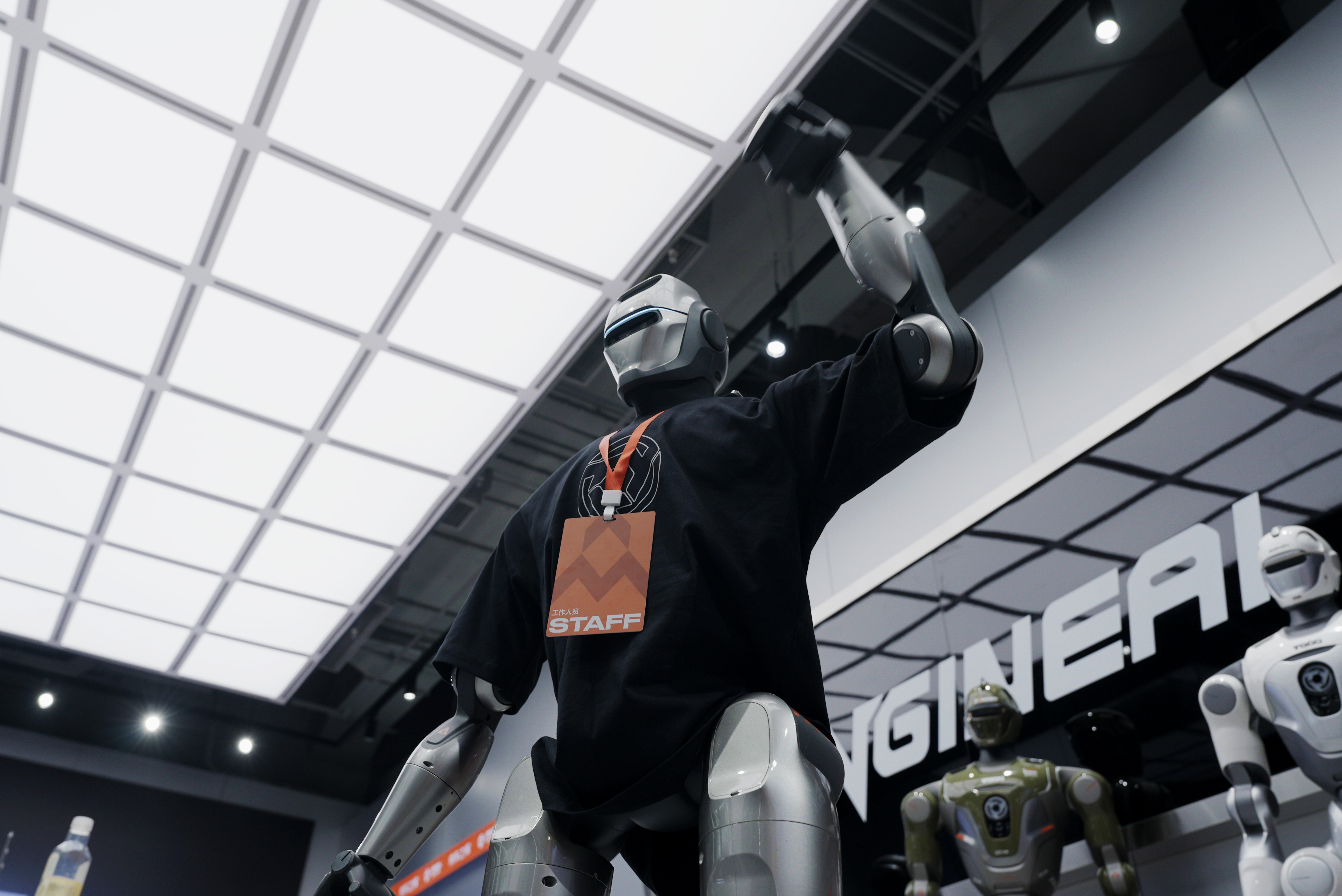
Competition Rules
Last Updated on March 2, 2026
1.Intellectual Property Statement
All content within this URKL Robot Combat Competition Rulebook (hereinafter referred to as the “Rulebook”), including but not limited to text, diagrams, illustrations, rule provisions, and mechanism designs, constitutes intellectual property owned by the URKL Robot Combat Competition Organizing Committee (hereinafter referred to as the “Organizing Committee”). No entity or individual may, without the written authorization of the Organizing Committee, reproduce, disseminate, modify, excerpt, or quote any part or the entirety of this Rulebook, nor use it for commercial purposes or any other unauthorized purposes. Violators of this statement will be held legally liable by the Organizing Committee.
By participating in the URKL Robot Fighting Competition, participating teams and relevant personnel are deemed to acknowledge and comply with this Intellectual Property Statement, commit to respecting the Organizing Committee's intellectual property rights, and refrain from any acts infringing upon the intellectual property rights of this rulebook.
2.Reading Instructions
This rulebook serves as the core guiding document for the URKL Robot Combat Competition. All participating teams, operators, technicians, and relevant personnel must thoroughly read and master all contents of this manual, strictly adhering to the rules when participating in the competition.
Provisions in this rulebook are categorized as mandatory or advisory. Mandatory provisions are explicitly stated using terms such as “must,” “prohibited,” or “shall not,” and must be strictly adhered to by participants. Advisory provisions are indicated by terms like ‘recommended’ or “may” and serve as guidelines for participants' reference.
Technical parameters, mechanism designs, and procedural specifications outlined in this manual are established to ensure competition fairness, safety, and competitiveness. The organizing committee reserves the right to adjust or supplement these provisions based on actual competition circumstances. Any relevant adjustments will be announced in advance through official channels.
Should participants have questions regarding any clause in this rulebook, they must submit inquiries through the designated official channels within the specified Q&A period. The organizing committee will provide unified responses. Inquiries not submitted within the stipulated timeframe may not receive individual responses.
The organizing committee of the URKL Robot Combat Competition reserves the final right of interpretation for this rulebook. Any disputes related to this rulebook shall be resolved based on the committee's interpretation.
3.Version Numbering System
This rulebook employs a version numbering system of “Major Version Number. Minor Version Number. Revision Number,” detailed as follows:
Major Version Number (X):
Increases when the rulebook undergoes significant structural adjustments, core mechanism changes, or the addition of important new sections. For example, V1.0.0 upgrades to V2.0.0.
Minor Version Number (Y):
Increases when the rulebook undergoes partial clause modifications, technical parameter adjustments, or the addition of non-core chapters. The major version number remains unchanged. For example, V1.1.0 upgrades to V1.2.0.
Revision Version Number (Z):
When the rulebook undergoes adjustments that do not affect the substantive content of the rules, such as proofreading, expression optimization, or error corrections, the revision version number is incremented while the major and minor version numbers remain unchanged. For example, V1.0.1 upgrades to V1.0.2.
The current version of the rulebook is: V2.0.0
4.Foreword
4.1 About the Competition
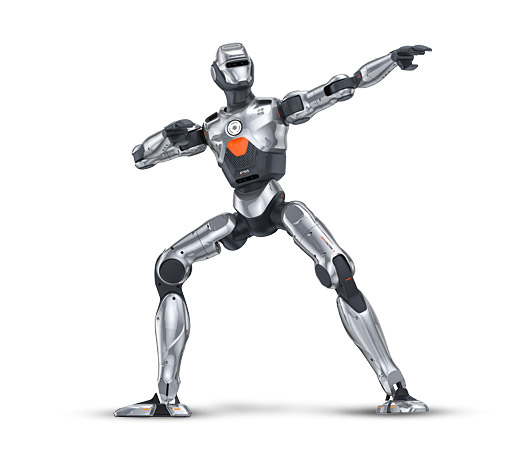
URKL (Ultimate Robot Knock-out Legend) is a premier humanoid robot competition open to universities, enterprises, and research institutions worldwide. Using the “Zhongqing” humanoid robot as the standard competition platform, it upholds the core principles of “open-source collaboration, joint technological research, fair competition, and non-violent safety.” The competition focuses on core technological capabilities of humanoid robots, including motion control, balance algorithms, perception and decision-making, power systems, and structural protection. It prohibits destructive or violent modifications, encouraging teams to enhance robot performance through self-developed protective gear, algorithmic innovation, and engineering optimization. URKL is committed to creating a technical exchange platform that combines entertainment value with scientific research significance.
The competition offers substantial rewards to winning teams, with the top prize valued at up to 10 million RMB,aiming to inspire global talent in the robotics field to engage in technological innovation and practical application.
4.2 Tournament Structure and Progression
The competition adopts a multi-stage tournament structure consisting of the Qualifying Stage, On-site Deployment Phase, Group Stage, and Double-Elimination Finals. Following registration and completion of the Qualifying Stage, 32 teams will advance to the on-site deployment phase.
On-site Deployment Phase
Qualified teams will conduct on-site hardware deployment and testing using the T800 humanoid robot platform. Based on technical evaluation results and deployment performance, 16 teams will advance to the Group Stage.Group Stage
The Group Stage will follow a double round-robin format. The 16 qualified teams will be randomly divided into four groups and will compete in humanoid robot combat matches within their respective groups. Teams will be ranked according to match performance and standings, with the top-performing teams advancing to the Finals. A total of 8 teams will qualify for the Finals.Finals
The Finals will be conducted using a double-elimination format. The top 8 teams will compete through a double-elimination bracket system to determine the championship title.
4.3 Competition Timeline
Registration for this event will open via the Zhongqing official website in March 2026. Online preliminary rounds will commence simultaneously in April; specific participation methods are detailed in the preliminary round guidelines below. From May to July, teams advancing through online preliminaries will undergo offline T800 hardware deployment testing. Final main event participants will be determined based on combined performance results. July will serve as the preparation period for the main event teams. From August to September, a group stage round-robin tournament featuring 16 teams will commence. The quarterfinals will take place from October to November. The semifinals and the global finals will be held from December to January 2027.
4.4 Competition Rewards
The event offers substantial rewards to winning teams, with cash prizes awarded to all teams reaching the top 8. As rankings advance, the champion team's prize value will reach 10 million RMB, aiming to motivate global robotics talent to engage in technological innovation and practical application.
Teams advancing to the top 16 of the competition will each receive ownership of a T800 robot.
All members of teams reaching the top 8 will gain exclusive access to a fast-track offer process for Zongqing Robotics, advancing directly to the final interview stage with priority hiring opportunities.
4.5 Regarding the Competition Rules Document
This rulebook serves as the sole official guideline for URKL Robot Combat Competitions, covering all core aspects including event organization, robot specifications, competition procedures, penalty standards, and appeal mechanisms. It constitutes the code of conduct for participating teams, operators, referees, and relevant staff.
The rulebook is formulated based on four core principles: Fairness, Impartiality, Safety, and Competition. Fairness is manifested through equal treatment of all participating teams with no differentiated application of rules. Impartiality is demonstrated by clearly defined penalty standards and procedures to ensure objective and credible competition outcomes. Safety focuses on protecting personnel, equipment, and venues, eliminating hazardous behaviors. Competition aims to fully unleash teams' technical potential and tactical creativity through scientifically designed rules.
The Organizing Committee reserves the right to revise the rule documents based on actual tournament operations (e.g., technological advancements, safety risks, participant feedback). Revised content will be publicly announced via official channels such as the website and tournament bulletins at least 7 business days in advance. Revised rules shall take effect upon expiration of the announcement period.
4.6 Regarding Rule Clarifications
To ensure teams accurately understand the rules and regulations, the organizing committee has established a dedicated channel for rule clarifications. Specific requirements are as follows:
4.6.1. Deadline for submitting clarification requests
From the date of the rulebook's release until 3 business days after the preliminary screening review concludes. No new clarification requests will be accepted after this deadline.
4.6.2. Submission Method
Teams may submit inquiries via the questionnaire below, clearly stating team name, contact person, contact information, and specific question. Questions must reference a specific chapter or clause in the rulebook; vague or ambiguous inquiries will not be accepted.
Participating teams are required to access the link below via a web browser to complete the questionnaire and submit any inquiries related to the competition:
https://dx3a2bminsq.feishu.cn/wiki/YyC2wRmZbinG61kVPfocgV0snUi
4.6.3. Q&A Response Method
The organizing committee will compile and organize all valid Q&A requests, providing consolidated responses weekly. Responses will be published through official channels, and individual teams will not receive separate replies.
4.6.4. Validity of Q&A Responses
The organizing committee's Q&A responses serve as supplementary clarifications to the rulebook and carry equal legal weight. In case of any conflict between Q&A responses and rulebook provisions, the latest revised rulebook shall prevail.
5.Key Concepts
5.1 Core Definitions
Participating Team:
Refers to an institution (university, enterprise, research organization) that has passed registration and preliminary screening to qualify for the main competition. Each team consists of operators, technical maintenance personnel, and coaches.
T800:
The designated humanoid robot model for the competition.
Judging Panel:
A panel of subject-matter experts responsible for technical evaluation and scoring oversight. For the Qualifying Stage, a three-member judging panel shall be appointed to ensure fairness, consistency, and objectivity throughout the evaluation process.
6.Preliminary Stage Format
The Qualifying Stage consists of two phases: the Preliminary Assessment and the Secondary Review:
If fewer than 32 teams achieve a cumulative score of 45 points or higher during the Preliminary Assessment, the Secondary Review shall not be conducted.
If more than 32 teams meet this threshold, the Secondary Review shall proceed.
Where a Secondary Review is conducted, a team’s Final Qualifying Score shall be calculated as the sum of its Preliminary Assessment score and Secondary Review score.
6.1 Submission Requirements
Participating teams are required to submit all required materials to the official competition email address (URKL@engineai.com.cn) no later than June 10, 2026, at 23:59 (UTC+8).
6.1.1 Simulation Demonstration Video
Teams must submit a clear and unedited demonstration video showcasing the complete boxing sequence of the T800 humanoid robot within the simulation environment. The video will be used to evaluate motion quality, execution stability, and overall visual performance.
Specifications:
Format: MP4
Maximum file size: 500 MB
Recommended resolution: 1080p
Recommended aspect ratio: 16:9
6.1.2 Reproducible Policy Files and Configuration Materials
Teams must provide policy files and model parameter configurations that can be directly loaded and reproduced within the official simulation deployment framework. All submissions must include the necessary environment specifications, dependency documentation, and execution instructions required to facilitate standardized reproduction and evaluation by the Technical Judging Panel.
6.1.3 Supplemental Materials
If any modifications have been made to the official runner or base framework, teams must additionally submit:
Complete executable source code
Clearly annotated modification records
Relevant deployment documentation
6.1.4 Supplemental Submission Guidelines
File Packaging and Organization
Teams shall submit separate data packages for each motion entry. Each submission package must include the associated policy files, configuration files, motion trajectory files, and demonstration videos.Submission Quantity and Evaluation Policy
No formal limit shall be imposed on the number of motion entries submitted by each team. All submitted entries will be reviewed by the judging panel, with final evaluation emphasizing the highest-performing submissions. Teams are encouraged to submit only their most competitive and technically refined work.
Eligibility Requirements for Full Scoring
To qualify for full scoring eligibility in Dimension B (Raw Motion Capture Data Pipeline) and Dimension C (Custom High-Dynamic Motion) of the Preliminary Assessment, teams must submit no fewer than two (2) distinct motion entries meeting the following requirements:
At least one motion entry must be trained using the official BVH/FBX skeletal motion datasets.
At least one high-dynamic motion entry must be trained using independently collected motion data.
Both conditions must be satisfied to qualify for full scoring consideration within the aforementioned evaluation dimensions.
6.2 Review Process and Reproduction Standards
To ensure the authenticity and reproducibility of submitted algorithms, the Qualifying Review process shall follow a standardized verification protocol.
The Organizing Committee will transfer all submitted materials to the Technical Judging Panel for evaluation. Judges will deploy submitted policy and configuration files within the official MuJoCo simulation environment.
Scoring shall be determined based on the accuracy of reproduction and consistency with the submitted demonstration video.
6.3 Scoring Dimensions and Quantitative Standards
Qualifying scores shall be independently assigned by a three-member judging panel. The final score shall be calculated as the average of all valid scores.
If the deviation between any individual judge’s score and the panel average exceeds 30%, a formal review process shall be initiated.
6.3.1 Preliminary Assessment (Maximum: 65 Points)
| Dimension | Sub-item | Points | Scoring Criteria |
A. Completion and Presentation | Submission of a clear T800 simulation demonstration covering the complete boxing sequence | 15 | 15 points: Complete high-resolution submission;0 points: Required materials missing |
| Motion fluidity with clearly distinguishable initiation, execution, and recovery phases | 15 | 15 points: Stable and fluid execution; 10 points: Minor motion instability or footwork irregularities; 0 points: Loss of balance resulting in system failure | |
B. Raw Motion Capture Data Pipeline | Development of a custom motion library using raw skeletal motion data (BVH/FBX) instead of relying exclusively on official remapped datasets (.npy) | 10 | 10 points: Successfully completed BVH/FBX integration and retargeting workflow; 0 points: No valid implementation submitted |
C. Custom High-Dynamic Motion Design | Development of independently generated high-dynamic boxing motion datasets featuring high-complexity movement sequences | 10 | 10 points: Successfully generated custom high-dynamic motion sequences; 0 points: No custom motion output submitted |
D. Robustness and Generalization | Demonstration of algorithmic robustness and generalization within the simulation environment | 5 | 5 points: Stable execution under moderate external interference; 0 points: Failure to maintain stability under interference |
E. Fidelity and Motion Fluidity | Natural motion transitions without significant latency or visual jitter | 10 | 10 points: Smooth and stable transition handling implemented; 0 points: No effective transition optimization implemented |
6.3.2 Secondary Review (Maximum: 95 Points)
| Dimension | Sub-item | Points | Scoring Criteria |
A. Reproduction and Engineering Quality | Successful deployment of submitted policy and configuration files within MuJoCo, with performance consistent with the submitted demonstration video | 10 | 10 points: Reproduced performance fully consistent with demonstration; 0 points: Significant inconsistency between reproduced performance and submitted materials |
| Engineering architecture, code organization, and deployment efficiency | 20 | 20 points in total, 10 points each: (1) Clear and maintainable project structure; (2) Complete dependency documentation and efficient deployment process | |
B. Raw Motion Capture Data Pipeline | Execution quality of motion sequences based on raw skeletal motion data (BVH/FBX) | 10 | 10 points: Stable and accurate execution; 5 points: Minor foot sliding or joint instability; 0 points: Loss of balance resulting in system failure |
C. Custom High-Dynamic Motion Design | Realization of high-complexity and visually refined motion sequences with stable execution quality | 10 | 10 points in total, 5 points each: (1) High motion complexity; (2) High reproduction fidelity |
D. Robustness and Generalization | Stable performance under perturbations and non-ideal initialization conditions | 15 | 15 points in total, 5 points each: (1) Fall recovery capability; (2) Smooth and human-like recovery motion; (3) Successful execution across uneven terrain or obstacle environments |
E. Fidelity and Motion Fluidity | Natural transitions without visible artifacts or joint instability | 10 | 10 points: No visible joint jitter during transitions; 0 points: Significant visual instability or joint jitter present |
F. Motion Fidelity and Pose Matching | Overall rhythm and posture consistency with official T800 boxing datasets (.npy) | 20 | 20 points: Automated system scoring based on joint pose and velocity matching performance |
6.4 Advancement Rules
6.4.1 Without Secondary Review
Teams shall be ranked according to Preliminary Assessment scores, and the top 32 teams shall advance to the next stage.
6.4.2 With Secondary Review
Teams shall be ranked according to their Final Qualifying Scores (Preliminary Assessment + Secondary Review), and the top 32 teams shall advance.
In the event of identical Final Qualifying Scores, rankings shall first be determined by the higher Secondary Review score. If a tie still remains, rankings shall then be determined sequentially based on scores achieved in Secondary Review Dimensions E, D, C, B, and A, respectively.
6.5 Results Announcement and Appeals
Final qualifying rankings will be published on the official website on June 15, 2026 (UTC+8). Advancing teams will additionally receive an official confirmation email. Any appeal must be submitted via email (URKL@engineai.com.cn) within 48 hours following publication of the results.
Each team shall be permitted one formal appeal submission, which must include:
A formal Letter of Appeal
Supporting evidence and factual statements
Detailed grounds for appeal
The specific claim or requested resolution
This White Paper shall take effect upon publication. The URKL Organizing Committee reserves the right to interpret and amend the provisions contained herein.
7.Qualifier Stage Format
7.1 Participation and Deployment
The preliminary stage primarily evaluates competing teams' competencies in physical robot deployment. During the offline preparation phase, the organizing committee will provide competition-standard robots and offer partial subsidies for travel and accommodation expenses.
7.2 Evaluation Workflow and Specifications
The official competition is structured into two distinct segments: the Base Score Segment and the Bonus Score Segment.
In the Base Score Segment, participating teams must execute demonstrations in the strict chronological sequence of: Fall Recovery -> Locomotion Demonstration -> Mimic Capability Demonstration. Each team is granted exactly one official trial. The tournament referee panel will rigorously evaluate and score performances according to a standardized grading rubric.
In the Bonus Score Segment, teams are granted three attempts each for the Punching Force Test and the Kicking Force Test. The referee panel will award bonus points based on each team's standing achieved within these respective tests.
7.3 Scoring Dimensions and Quantitative Standards
The preliminary round aggregate score is composed of two primary components: Base Scores and Bonus Scores.
7.3.1 Base Score (Total: 100 Points)
During the official competition, teams must strictly adhere to the demonstration sequence: Fall Recovery -> Locomotion Demonstration -> Mimic Capability Demonstration. Each team is permitted only one opportunity.
The Base Score comprises three core components: Basic Mimic Capability, Locomotion, and Recovery Actions.
For the basic mimic capabilities, the official BVH data for the jab, hook, front kick, and spinning kick will be provided by the
organizer, and teams are required to use only the official data for training.
For the taunting and celebration motions within the basic mimic capabilities, the organizer will provide reference videos
only, and teams are required to independently design their own distinctive motions.
Action Category | Action Description | Points | Evaluation Criteria | Scoring Rubric |
A.Recovery Actions | The robot must execute a forced joint reset without human intervention, followed by recovering from a prone (face-down) fallen posture back to the fighting stance. | 15 | Recovery Time | Organizers will designate an 8m-diameter circle; the robot must remain within the specified boundary during recovery for the score to be validated: • 15 points: 0–3s autonomous recovery to fighting stance/locomotion • 10 points: 3–10s autonomous recovery • 5 points: 10–20s autonomous recovery • 0 point: Exceeding 20s or failure to recover |
The robot must execute a forced joint reset without human intervention, followed by recovering from a supine (face-up) fallen posture back to the fighting stance. | 15 | Recovery Time | Organizers will designate an 8m-diameter circle; the robot must remain within the specified boundary during recovery for the score to be validated: • 15 points: 0–3s autonomous recovery to fighting stance/locomotion • 10 points: 3–10s autonomous recovery • 5 points: 10–20s autonomous recovery • 0 point: Exceeding 20s or failure to recover | |
B.Locomotion | Mobility capability | 30 | Mobility capability | Teams must navigate obstacle terrain while maintaining a fighting locomotion stance. (Specific routes will be announced on match day) • 1st & 2nd Place: 30 points • 3rd & 4th Place: 24 points • 5th & 6th Place: 18 points • 7th Place: 12 points • 8th Place: 6 points |
C. Basic Mimic Ability | Straight Punch | 6 | Accuracy Robustness Control | Each combat action consists of 5 striking rounds per team (6 seconds per round). Initial distance to target: 3m. The robot must resume a fighting stance post-strike for validity. Any knockdown during a round invalidates that round's score. If multiple successful strikes occur within a single round, only the highest score is recorded. The cumulative score of all 5 rounds constitutes the team's total for that combat action, ranked for point allocation. • 1st & 2nd Place: 6 points • 3rd & 4th Place: 4 points • 5th & 6th Place: 3 points • 7th Place: 2 points • 8th Place: 1 point |
Hook Punch | 6 | |||
Front Kick | 6 | |||
Sweeping Kick | 12 | Accuracy Robustness Control | Each combat action consists of 5 striking rounds per team (6 seconds per round). Initial distance to target: 3m. The robot must resume a fighting stance post-strike for validity. Any knockdown during a round invalidates that round's score. If multiple successful strikes occur within a single round, only the highest score is recorded. The cumulative score of all 5 rounds constitutes the team's total for that combat action, ranked for point allocation. • 1st & 2nd Place: 12 points • 3rd & 4th Place: 8 points • 5th & 6th Place: 6 points • 7th Place: 4 points • 8th Place: 2 points | |
Taunt Action | 5 | Aesthetic Appeal Styling | ||
Celebration Action | 5 |
7.3.2 Bonus Score (Total: 20 Points)
The Bonus Score segment is designed to incentivize exceptional performance. It comprises two independent events: the Punching Force Test and the Kicking Force Test. Both events are scored independently, with a maximum of 10 points each, awarded according to performance rankings from highest to lowest. In the event of identical force measurements, teams tied for the same numerical value will share the corresponding rank and receive equal points.
Bonus Points Awarded |
1st Place 10 Points 2nd Place 8 Points 3rd & 4th Place 6 Points 5th & 6th Place 4 Points 7th & 8th Place Points |
Force testing utilizes professional-grade dynamometer equipment to ensure precise, equitable, and fully traceable data acquisition. All apparatuses will undergo standardized calibration prior to testing. Participating teams are permitted two trial strikes prior to official testing (trial scores are excluded from official rankings). Each team is granted three test opportunities per discipline (Punching and Kicking), with each test window lasting 30 seconds.
To be registered as valid, strikes must exhibit complete mechanical form, coherent force generation, and direct impact upon the testing target. Referees will judge strike validity on-site; invalid strikes are excluded from scoring but will consume a test attempt. Force measurements are recorded immediately following each test, and the highest force reading achieved within the 30-second test window shall constitute the team's official valid score.
7.4 Advancement Rules
7.4.1 Direct Advancement Pathway (Special Qualification)
A team will bypass subsequent cumulative score rankings and directly secure qualification for advancement if they simultaneously fulfill all three of the following criteria:
• Ranked 1st in the Punching Force Test
• Ranked 1st in the Kicking Force Test
• Achieved a Base Score ≧ 32 points
7.4.2 Standard Advancement Rules
During the preliminary stage, the 32 participating teams will be divided into 4 groups. Within each group, members are ranked in descending order based on their final aggregate scores. The top 4 teams from each group will advance, culminating in a total of 16 advancing teams. For teams outside the direct advancement pathway, cumulative scores are calculated as the sum of both forced test scores. A team's final preliminary score is the sum of its Base Score and Bonus Score.
In the event of identical final scores, tie-breaking criteria are applied in the following prioritized order:
Higher Bonus Score ranks higher.
If Bonus Scores are identical, scores from preliminary evaluation dimensions A, B, and C are compared sequentially to determine final standings.
7.5 Score Publication and Dispute Resolution
Throughout the preliminary stage, participating teams must strictly adhere to venue decorum and comply with all referee rulings. Any objections regarding scores must be formally submitted within ten minutes following the conclusion of the test.
Preliminary standings will be officially published via the official WeChat Official Account, and successfully advancing teams will receive official confirmation emails. If a team wishes to contest the published results, formal appeal materials must be submitted to the official tournament email address (URKL@engineai.com.cn) within 24 hours of publication.
Each team is permitted only one appeal opportunity during the preliminary stage. Appeal submissions must include an official appeal letter, a factual statement, supporting grounds for the appeal, and the specific relief sought.
This white paper shall take effect upon publication and is interpreted by the URKL Tournament Organizing Committee. Matters not covered herein will be clarified in subsequent supplementary rules.
8.Main Tournament Stage Format
To Be Announced

![[x]](/static/home/images/closeicon1.svg)